Policy experts have called for stronger support and incentives for enterprises offering work-based learning (WBL) opportunities to young people transitioning from school to the workforce.
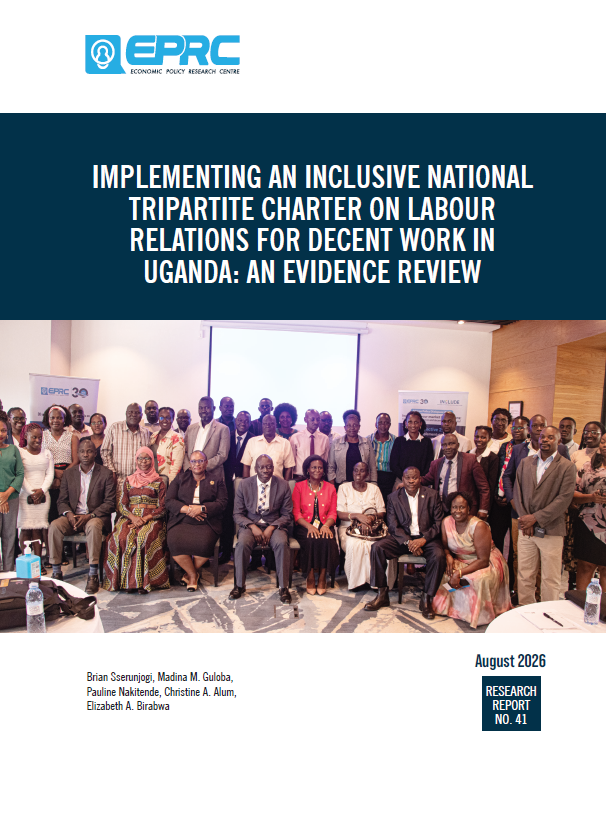
The call was made at the Sheraton Kampala Hotel during a workshop hosted by the Economic Policy Research Centre (EPRC) to validate findings from a recent study on the status of WBL in Uganda.
Speaking at the event, Mr Enoch Mutambi, a work-based learning specialist at the Ministry of Gender, Labour and Social Development, highlighted the sacrifices made by companies that take on raw learners to train them in industry-relevant skills.
“Work-based learning can be disruptive to enterprises,” Mutambi noted. “You must have a well-formed mechanism for how you’re going to integrate learners into the real work.”
Workshop participants agreed on the urgent need to incentivise private sector firms willing to open their doors to young trainees. Presenting the research findings, Dr. Christine Arwata Alum, a Research Fellow at EPRC, emphasised WBL’s immense potential to prepare youth for the job market. She quickly noted, however, that current initiatives remain uncoordinated, with majority employers viewing the training of new workers as an excessive financial burden.
Nearly 41% of Ugandan youth are Not in Employment, Education, or Training (NEET). And a large portion of employed youth are trapped in informal, low-productivity activities characterised by low earnings and a lack of social protection.
Dr. Madina Guloba, a Senior Research Fellow representing EPRC Executive Director Dr. Sarah N. Ssewanyana, stressed that a structured workplace learning bridges key labour market gaps.
“If properly designed, WBL strengthens the connection between education and employment outcomes,” Dr. Guloba said. “It helps address skills mismatches, improves youth employability, and facilitates school-to-work transitions…”