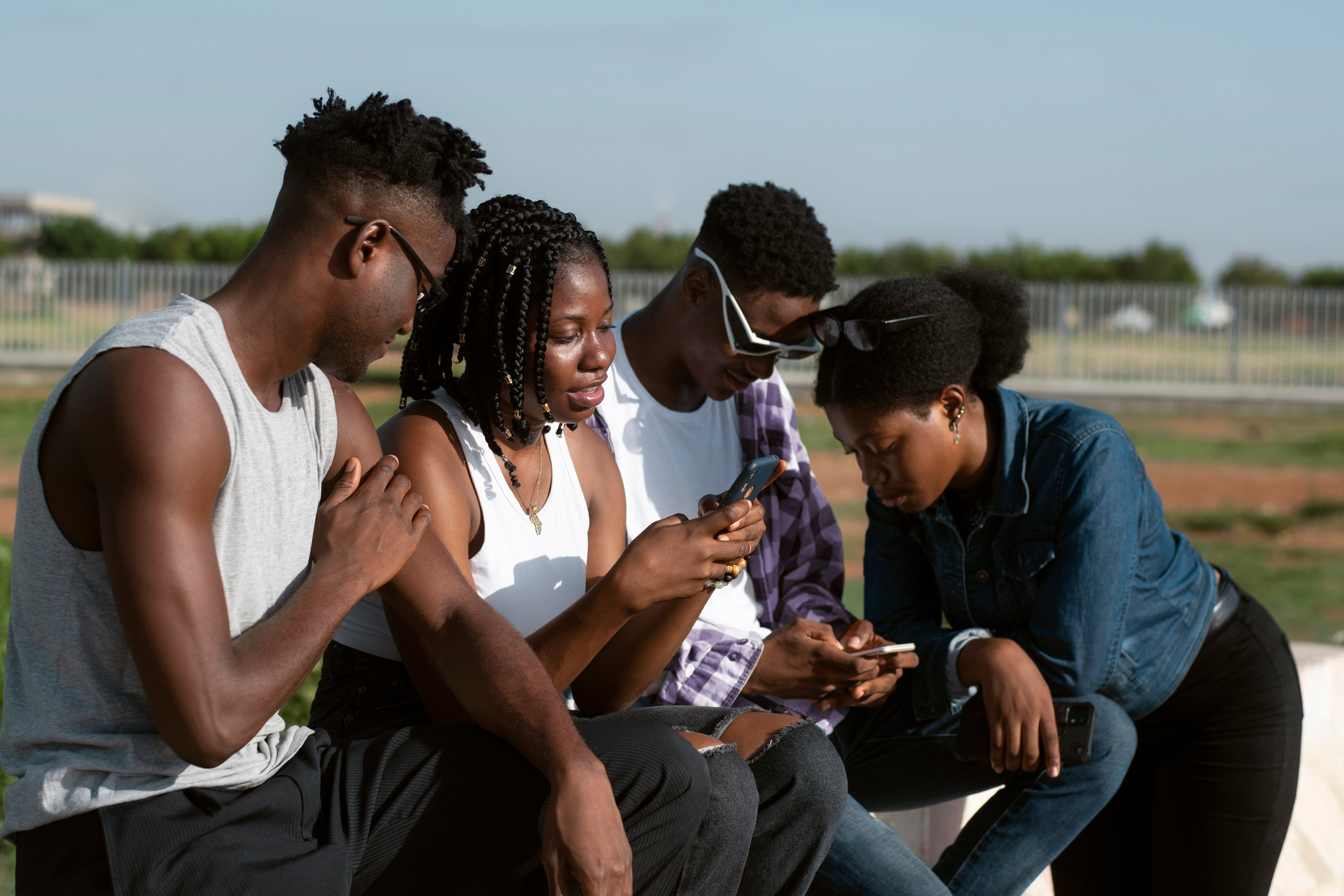
What was once dismissed as a “digital divide” is now becoming a bridge that links a younger generation to the political arena. Over the past decade, the internet has proven to be an effective driver of youth political engagement, reshaping how young Ugandans interact with parties, institutions and each other.
As they adopt new technologies faster than older cohorts, they gain quicker access to news and forums for debate, turning the online sphere into a new public square.
Afrobarometer’s 2024 survey paints a vivid picture of this shift. Across 28 African countries, 49 % of respondents report frequent internet use, and 57 % of those aged 18‑35 are active online. Uganda mirrors the continental trend even when its youth still lag neighbours in overt political expression. Only 5 % of Ugandan youths who use the internet frequently post about politics or community affairs, compared with 14 % in Kenya.
Despite modest posting rates, the way Ugandans source their news is changing dramatically. In urban areas, the share of people getting news from the internet rose from 17 % to 20 %, while social‑media news consumption jumped from 20 % to 29.4 % between 2017 and 2024. Rural figures show a similar growth, with internet news sources increasing from 3 % to 7.3 % and social‑media from 4 % to 8.8 % over the same period. This upward trajectory reflects broader improvements in internet coverage and smartphone ownership.
One can conclude that economic hardship fuels much of online activism. High unemployment and limited prospects push many young Ugandans to voice frustration on social media platforms, demanding government action. The digital realm thus becomes a pressure valve, allowing dissent to surface where street protests may be too risky. However, the internet’s promise is tempered by two major challenges.
First, misinformation spreads easily, causing confusion and sometimes discouraging participation, even voting. Second, governments increasingly resort to internet shutdowns as crisis‑management tools. In 2024, fifteen African nations experienced such blackouts, many of which happened during elections – an act of taking away young people’s voice.
Uganda is the latest culprit, switching off the internet for nearly a week during the just concluded presidential and parliamentary elections. The internet blackout cut off online media coverage of the elections and disrupted live updates and information flows on voting and results, undermining transparency and trust in the entire process.
Nevertheless, the internet remains a powerful instrument for political mobilisation. Online platforms are linked to higher voter turnout and increased party membership, especially among previously disengaged citizens. They also serve as repositories of voter information, enabling young people to verify polling details and hold candidates accountable. Political parties have taken note: recruitment of popular internet personalities and targeted social‑media campaigns are now standard tactics to capture the youth vote.
Uganda’s mobile landscape underscores the opportunity. Active 90-day mobile internet subscriptions reached 15.7 million in 2024, indicating a vast, reachable audience. The internet is not a cure‑all, but it can be indispensable tool for a revitalised Ugandan democracy. By fostering a digital public square that is inclusive, reliable and resilient, the nation can convert the latent energy of its youth into constructive political participation. The stakes are clear: embrace the internet as a catalyst for change, or risk alienating an entire generation whose voices already echo across screens and, increasingly, onto the streets.
Ms Aida Nattabi is a research analyst at Economic Policy Research Centre
This article first appeared in the Daily Monitor on January 31, 2026
Featured photo/courtesy