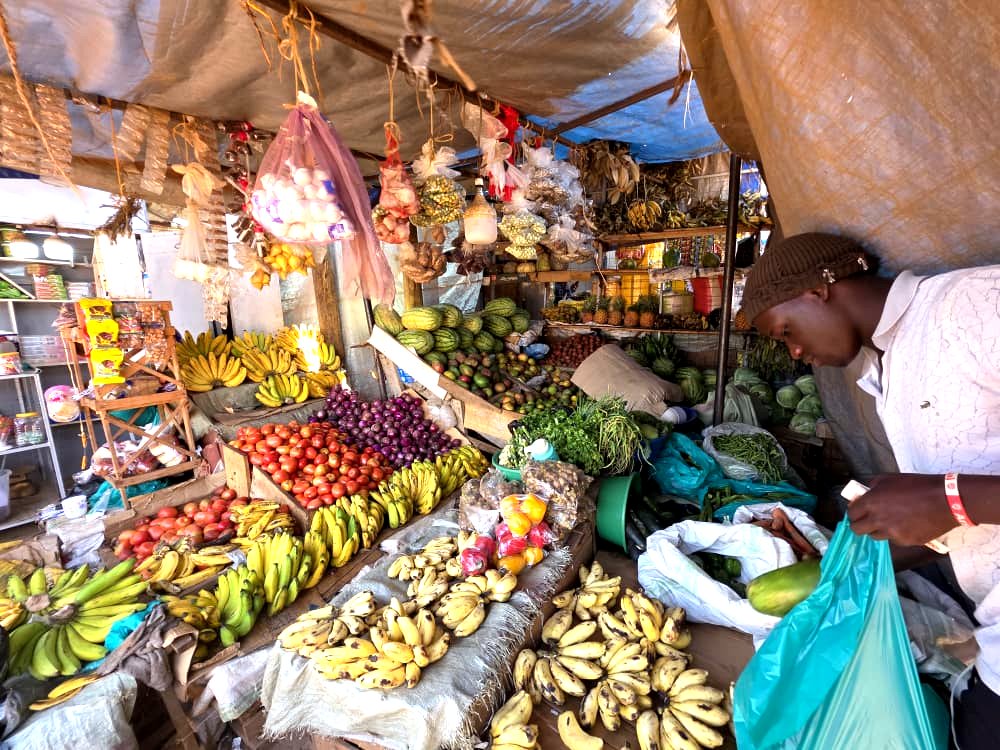
Agriculture is central to Uganda’s economy because it supports livelihoods, food security, agro-industrialisation, export earnings, and rural income generation. The Uganda Bureau of Statistics 2024 reported that 62.3 percent of households were agricultural households.
However, climate variability has become one of the most serious threats to Uganda’s agricultural sector. Rising temperatures, erratic rainfall, prolonged dry spells, disrupt planting and harvesting schedules, reduce crop yields, degrade soils, and raise production costs for farmers. These effects are particularly severe because most smallholder farmers depend on rainfall, operate on small landholdings, and have limited access to irrigation, affordable credit, crop insurance, timely climate information, and reliable extension support.
Drought is especially damaging because it causes moisture stress during critical crop growth stages and can lead to yield losses in staple crops such as maize, millet, matooke, beans, cassava, and rice. Cash crops such as coffee, tea, cotton, flowers, and cocoa are also affected when drought reduces flowering, berry development, vegetative growth, and overall productivity.
Government initiatives
Recognising the increasing threat posed by climate variability, the Government of Uganda has positioned irrigation as a strategic intervention for strengthening agricultural resilience and productivity. Irrigation development is reflected in policy and programme frameworks such as Uganda’s National Irrigation Policy, the National Climate Change Act 2021, the National Development Plan framework, and sector programmes implemented by the Ministry of Agriculture, Animal Industry and Fisheries (MAAIF) and the Ministry of Water and Environment (MWE).
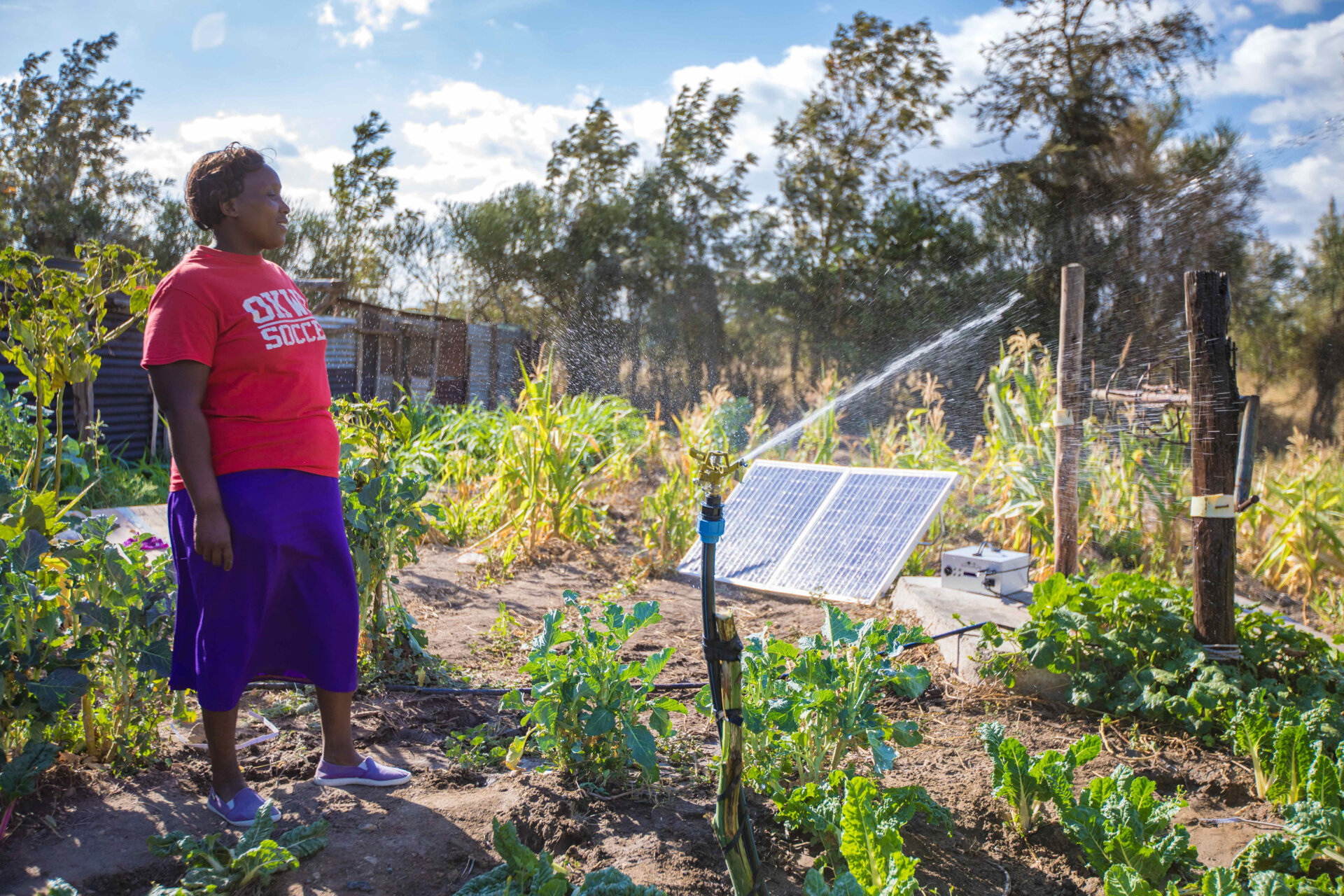
The most prominent government initiative is the Micro-scale Irrigation Program, implemented under MAAIF and supported through the Uganda Intergovernmental Fiscal Transfers Program (UgIFT). This initiative uses a matching grant arrangement to support smallholder farmers to purchase and use individual irrigation equipment, with government co-financing part of the equipment cost.
Despite these policy and programme efforts, irrigation adoption remains very low among crop-growing households. UBOS reported in 2022 that only 2.3 percent of crop-growing households had an irrigation system during the second agricultural season of 2021, while only 0.7 percent had an irrigation system during the first agricultural season of 2022.
The report further showed that only 1.4 percent of planted areas were under irrigation in the second season of 2021, falling to 0.3 percent in the first season of 2022. These figures confirm that Uganda’s agriculture remains overwhelmingly rain-fed and therefore highly exposed to climate-related shocks.
Floods and excessive rainfall can destroy crops, erode fertile soils, increase post-harvest losses, and damage rural infrastructure, including roads, small bridges, storage facilities, and water control structures. According to the Food and Agriculture Organisation (FAO) report, irrigation reduces risks associated with rainfall-dependent agriculture. By supplying water to crops during dry spells or outside the normal rainy season, irrigation can stabilise production, reduce crop failure, support year-round farming, and improve household and national food security.
In practical terms, irrigation can facilitate multiple cropping seasons, increase land productivity, and encourage production of high-value crops such as vegetables, rice, fruits, flowers, coffee, and other enterprises that require more reliable water supply. The Micro-scale Irrigation Program is especially relevant for smallholder farmers because it supports individual farmers to irrigate small plots of up to 2.5 acres, access co-financed equipment, receive extension support, and transition from subsistence production toward more commercial agriculture.
The Ministry of Water and Environment’s Irrigation for Climate Resilience Project (ICRP) also reinforces this direction by promoting adoption of irrigation among smallholder farmers, increasing water storage capacity, supporting sustainable catchment management, and establishing management arrangements for irrigation service delivery. These interventions show that irrigation is both an agricultural productivity measure and a climate adaptation strategy.
Strengthening small-holder irrigation initiatives
In June 2026, EPRC convened the 14th Annual National Forum on Agriculture and Food Security under the theme “Investing in Irrigation to Build a Climate Resilient Smallholder Farmer in Uganda.” The aim of the forum was to stimulate a debate on the effectiveness, accessibility, financing, and sustainability of affordable small-scale irrigation initiatives for smallholder farmers in Uganda, and to identify practical policy actions for strengthening irrigation systems for climate resilience.
Some of the practical actions identified by stakeholders during the Forum was to progressively grow the domestic financing share for water for agricultural production so that the irrigation agenda becomes less vulnerable to external funding and develop markets so that the rational farmers confidently invest in irrigation while sure of a reward for their investment.
However, irrigation will only deliver strong results if it is combined with complementary investments. Farmers need affordable equipment, reliable water sources, energy access, extension support, finance, market linkages, farmer organisation, land and water governance, and training on efficient water management. Irrigation should also be integrated with improved seed, soil and water conservation, pest and disease management, post-harvest handling, climate information services, and value-chain development.