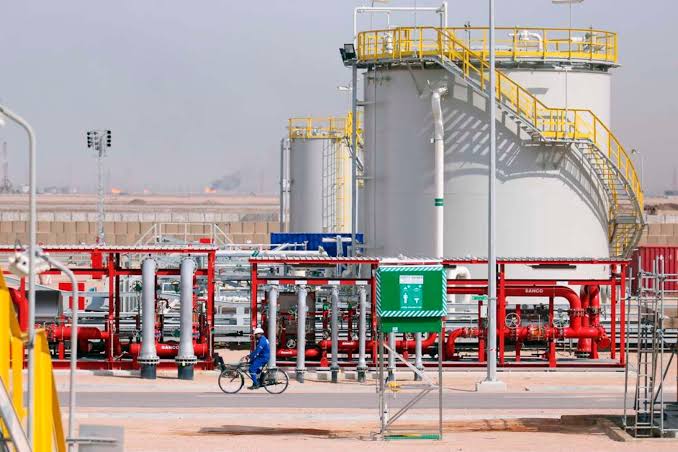

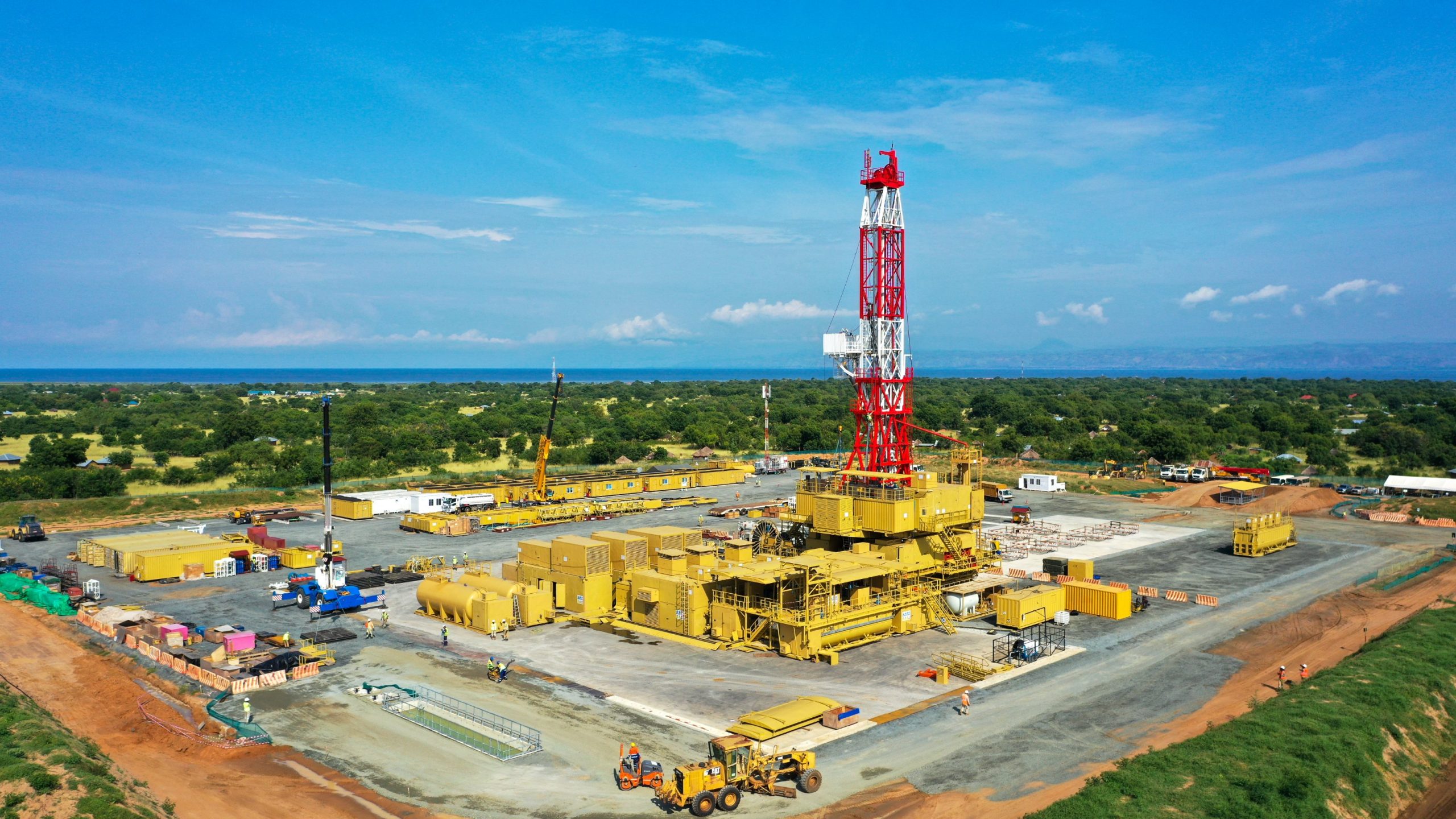
Uganda is set to launch commercial oil production in July 2026 as part of its ambitious targets to grow the economy from USD 50 million in 2024 to USD 500 million by 2040. The oil and gas sub-sector present enormous opportunities for Ugandans, mainly jobs through direct employment and contracts to supply goods and services. According to the Petroleum Authority of Uganda (PAU), USD 1.91 billion (26%) was committed to Ugandan companies out of USD 7.14 billion approved investment in the ongoing development phase, almost achieving the 40% local content target for this phase.
Regarding jobs, 13,067 people were employed in the oil and gas sub-sector by December 2023, 90% of whom were Ugandans and 35% of them were from the host communities. This achievement is attributed to the government’s deliberate effort to ensure local content as indicated in the 2008 National Oil and Gas Policy.
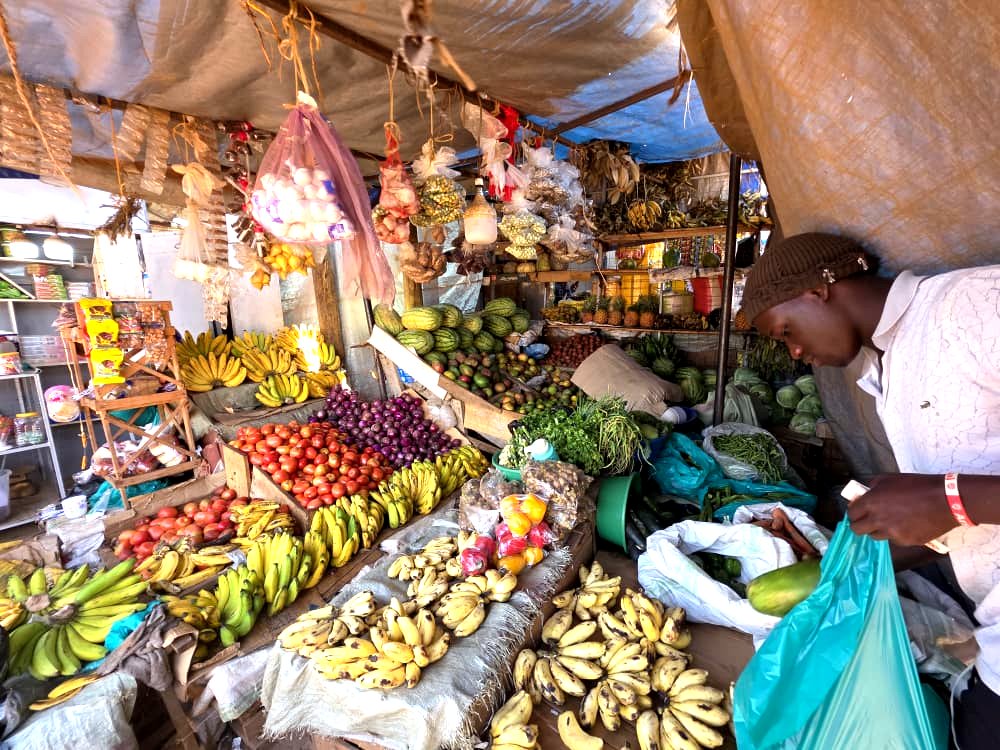
Despite the highlighted opportunities and government efforts to prioritise Ugandans, some businesses are not aware of the beginning of commercial oil production in July 2026. Among those who are aware, some are not ready or prepared to take up opportunities presented by the oil and gas sub-sector. This blog presents the status of preparation of Ugandan businesses regarding Uganda’s first commercial oil production. The findings are based on evidence from 824 businesses surveyed by the Economic Policy Research Centre (EPRC) in the quarterly Business Climate Survey (BCS) for the quarter October-December 2025. Below are the findings;
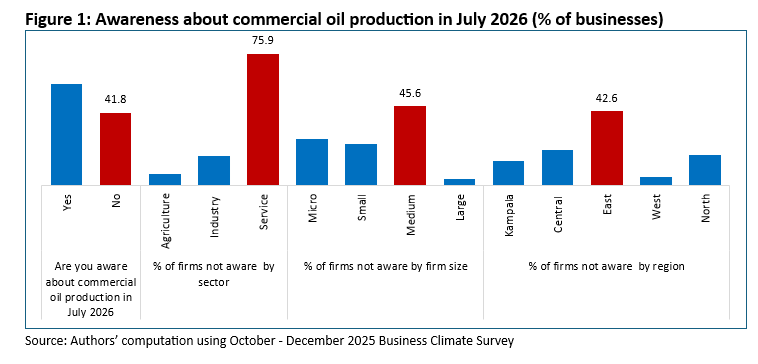
Forty one percent of local businesses are still not aware of the commencement of commercial oil production that is scheduled for mid-2026 (Figure 1). The lack of awareness was mainly reported by medium-sized businesses in the service sector, specifically those engaged in the accommodation and food service activities. A disaggregation by region shows that the information gap is highest amongst firms in the Eastern region, implying that firms in these categories are more likely to be left out on some of the mentioned opportunities presented by the oil and gas sub-sector.
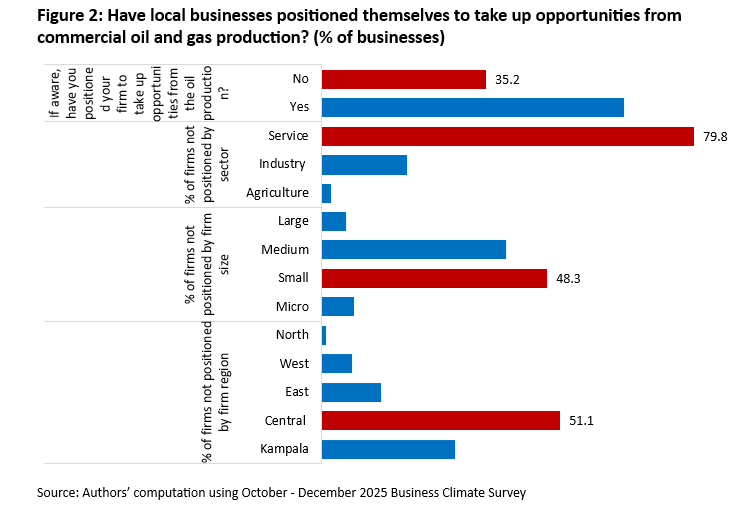
Furthermore, about 35 percent of businesses that are aware about Uganda’s first commercial oil production have not prepared their businesses to leverage the opportunities presented by the sub-sector. Figure 2 reveals that these are mainly small businesses in the services sector, specifically those dealing in human health and social work, financial and insurance activities. This evidence reveals the information gap regarding the potential backward and forward linkages related to commercial oil production among domestic businesses. Of the businesses not positioned yet, the graph also shows relatively larger proportions of business in the central (51.1 percent) and Kampala (28.6 percent) regions compared to other regions despite hosting Uganda’s capital and central business district.
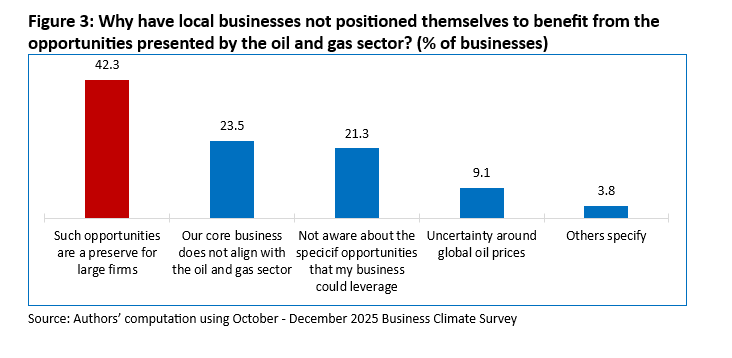
Considering the reasons for lack of preparedness, 42.3 percent of the businesses reported that they believe such opportunities are ring-fenced for large businesses. This was mainly reported by micro and small firms. This perception implies that despite the earlier mentioned awareness and preparedness among micro-sized businesses, they expect minimal benefits from the oil and gas business opportunities relative to their large counterparts.
Additionally, 23.5 percent of businesses reported that their core line of work is not closely aligned with the oil and gas sub-sector while 21.3 percent are not aware of the specific opportunities that their businesses could leverage from the sub-sector. This is consistent with the information gaps mentioned earlier.
Overall, the findings indicate that information about the first commercial oil production and the opportunities it presents has not diffused evenly across all sectors, firms and regions, underscoring the need for an efficient targeted and segmented communication strategy to bring more potential beneficiaries on board.