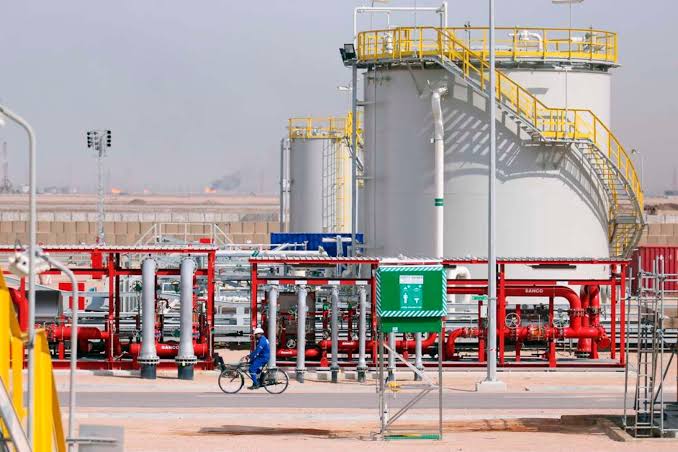
Uganda’s economy is projected to grow by 10.2% this financial year (2026/27), up from an estimated 6.4% in FY2025/26 (MoFPED, 2026). While this acceleration is premised on the country’s anticipated commencement of oil production, double-digit growth benefits touch local livelihoods.
Presenting this year’s budget speech, Finance Minister Henry Musasizi noted: “A larger economy will create more jobs, raise household incomes, expand opportunities for business, and generate the resources required to invest in quality education, healthcare, infrastructure, security, and other public services…”
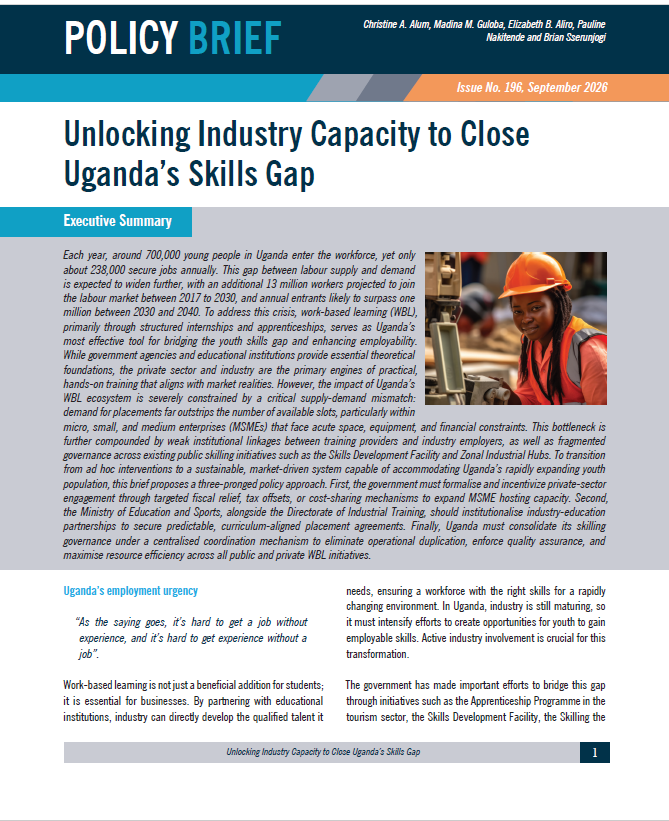
However, this optimistic outlook comes at a time when there are serious concerns about deepening unemployment in the country. The Uganda Bureau of Statistics’ Labour Market Survey 2025 put national unemployment at 12.2 %, with youth (aged 18-30) unemployment at 16.2%.
It remains unclear to whether Uganda can turn projected growth into productive jobs for young people. If high unemployment persists, it means fewer Ugandans can contribute productively to national output. It may also be a source of crime, social frustration, inequality, and undermines social cohesion.
The urgency to translate economic growth numbers into viable employment is well-captured in the World Bank Group’s new Country Partnership Framework for Uganda for 2026-2035. The ten-year strategy places the creation of more and better jobs at the centre of Uganda’s development agenda, noting that an estimated 600,000 to 700,000 young people enter the labour market annually, underscoring the urgency of finding work for them.
What can be done?
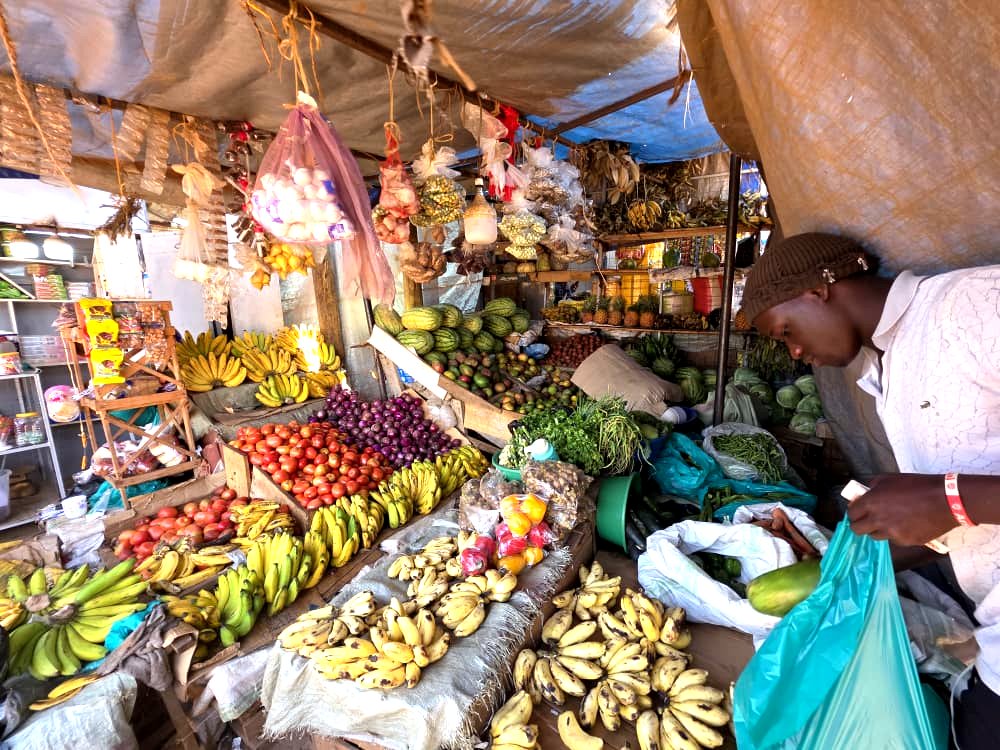
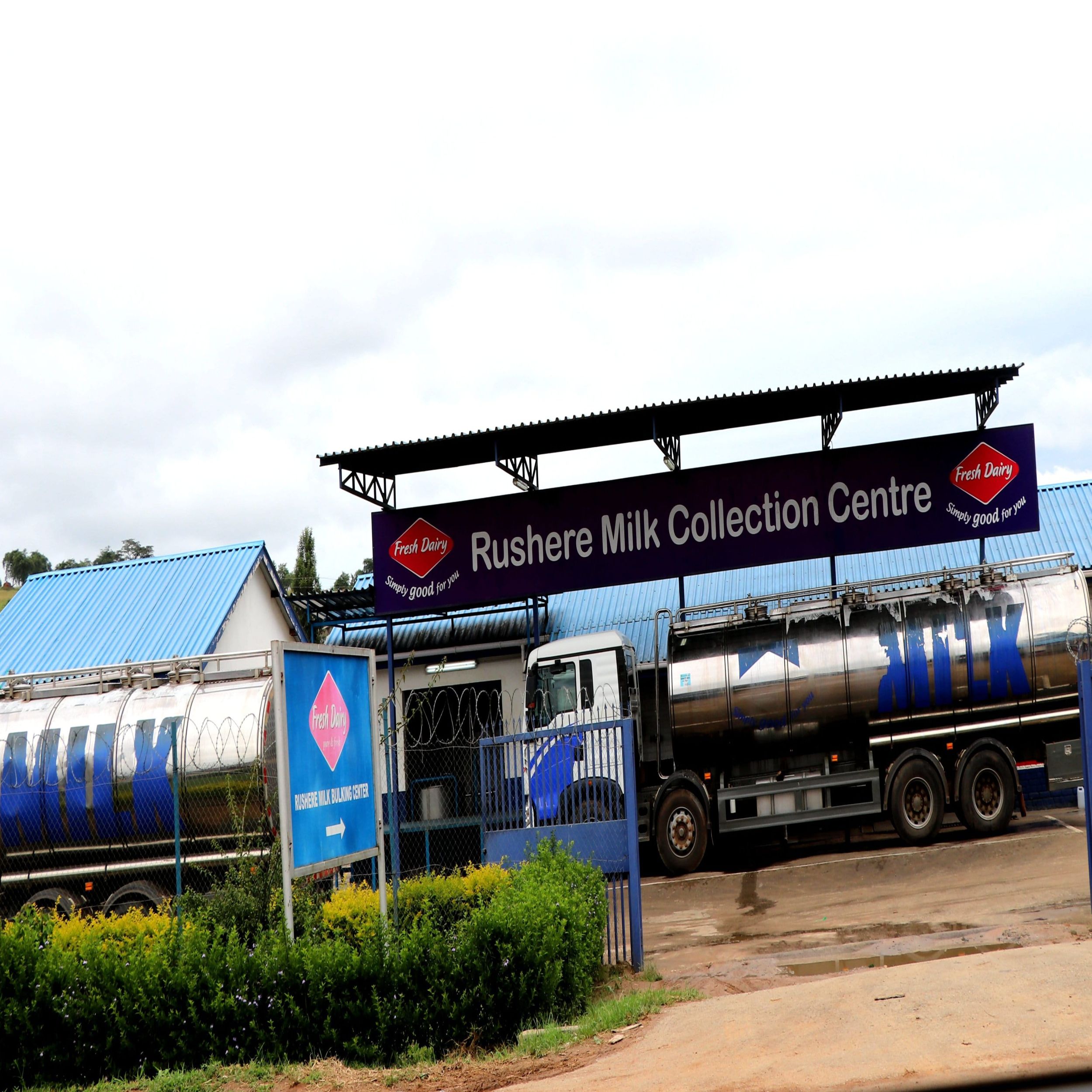
Agro-industrialisation, the process of integrating agricultural production with industrial manufacturing to add value to raw agricultural commodities, offers one of the clearest pathways for making growth create much needed employment. This is partly due to low entry barriers. The government has recognised this by allocating UGX 2.26 trillion to the Agro-Industrialisation Programme in FY2026/27 (MoFPED, 2026).
Existing government initiatives such as the Parish Development Model (PDM), Emyooga, and the Youth Livelihood Programme (YLP) have already laid an important foundation for job creation by pushing finance closer to ordinary Ugandans, especially in rural and semi-urban communities (MoFPED, 2026). Through these programmes, farmers, youth, women, traders, and small enterprise groups have been able to access start-up or expansion capital that would otherwise be difficult to obtain from commercial banks.
In practice, this has supported small-scale farming, livestock enterprises, produce trading, food processing, tailoring, welding, transport, retail businesses, and other income-generating activities.
Their employment effect comes through both direct and indirect channels. Directly, beneficiaries use the funds to start or expand enterprises, which creates self-employment and household income. Indirectly, these enterprises create demand for labour and services around them.
For example, a farmer who receives financing to expand poultry or dairy production may need workers, veterinary services, feed suppliers, transporters, and market vendors. Similarly, a youth group engaged in grain milling, juice making, bakery production, or produce aggregation creates jobs not only for its members but also for suppliers, machine operators, packagers, and distributors. Those already involved in small-scale processing and manufacturing can be supported through affordable working capital, business training, quality certification, and regional markets so that they can expand production and hire more workers.
These initiatives also complement broader agro-industrialisation instruments such as the Agricultural Credit Facility, Uganda Development Bank financing, agricultural insurance, irrigation, extension services, and input-support programmes. While PDM, Emyooga, and YLP help mobilise grassroots enterprise activity, these other instruments can support larger investments in mechanisation, storage, agro-processing, quality control, and market access. Together, they form a wider job-creation ecosystem.
However, the impact of these initiatives is limited by low fertilizer and irrigation usage, expensive and unreliable electricity, poor post-harvest handling, inadequate business skills, weak market linkages, delayed funding, and poor project monitoring – issues that collectively limit agro-industrialisation’s impact.
To benefit from these programs, the government should strengthen beneficiary training, link enterprises to processors and reliable markets, improve monitoring and coordination, provide appropriate technologies, and prioritise commercially viable agricultural value chains to ensure that financing generates sustainable businesses and jobs (Fowler & Rauschendorfer, 2019).
Uganda’s projected economic growth soothes Ugandans’ optimism. However, it will only be meaningful if this growth can be turned into productive employment and improves livelihoods. Agro-industrialisation may offer practical pathways to achieving just that.
References
Fowler, M., & Rauschendorfer, J. (2019). Agro-industrialisation in Uganda: Current status, future prospects and possible solutions to pressing challenges (F-IH-UGA-006-2). International Growth Centre. https://www.theigc.org/sites/default/files/2019/11/Fowler-and-Rauschendorfer-2019-Working-paper-v2.pdf
Ministry of Finance, Planning and Economic Development. (2026). Budget speech financial year 2026/27. Government of Uganda. https://budget.finance.go.ug/sites/default/files/National%20Budget%20docs/Budget%20Speech%20FY%202026-27.pdf
National Planning Authority. (2025). Employment and skills status report 2025. Government of Uganda. https://npa.go.ug/wp-content/uploads/2025/12/FINAL-ESSR-REPORT-2025.pdf
Uganda Bureau of Statistics. (2026). Labour Market Survey 2025 report. Uganda Bureau of Statistics. https://www.ubos.org/wp-content/uploads/publications/05_2026Labour_Market_Survey_Report_y2025.pdf
World Bank. (2025). Uganda economic update: Cultivating prosperity through agro-industrialization (26th ed.). World Bank. https://www.worldbank.org/en/topic/agriculture/publication/uganda-economic-update