Ugandans are yet again facing higher fuel prices, largely driven by tensions in the Middle East. The ongoing US/Israel–Iran conflict has unsettled global oil markets, disrupting supplies.
For fuel-importing countries like Uganda, such shocks quickly transmit into higher pump prices, transport costs, and economy-wide inflation. Uganda currently imports all its petroleum products, a reality which exposes the country to global oil price swings, exchange rate pressures, and supply chain disruptions.
The impact is already being felt across households and businesses. Recent data from the Uganda Bureau of Statistics shows that monthly Energy Fuel and Utilities (EFU) Inflation experienced a 1.8 percent increase in April, up from 1.0 percent in March. This was largely due to a 4.8 percent increase in the monthly Liquid Energy Fuels Inflation, with petrol and diesel prices experiencing the biggest jumps.
Between January and June 2026, the average retail price of petrol rose from nearly UGX 5,058 to UGX 6,617, while diesel increased from UGX 4,693 to UGX 6,490 per litre. These increases translate into higher living costs in form of high food prices, manufactured products, and services for the average household.
Could global oil price swings boost Uganda’s adoption of electric vehicles? The recent surge in global fuel prices is already accelerating the shift toward E-mobility in Europe, Latin America, and the Asia-Pacific region, as consumers seek alternatives to petrol and diesel vehicles.
In Uganda, the economic case is particularly compelling when comparing electric vehicles (EVs) with traditional fossil fuel-powered vehicles. A recent study by the Economic Policy Research Centre (EPRC) shows that EVs are cheaper to operate and maintain than their fuel counterparts, mainly in terms of annual maintenance costs and energy consumption per kilometre.
A typical petrol or diesel vehicle consumes approximately 10 litres of fuel every 100 kilometres, costing the owner about USD 2,400 a year in fuel alone. In contrast, EVs run on electricity worth just USD 400 annually. The gap is even wider for buses, with the overall cost of ownership, operation and maintenance of an electric bus (E-bus) only 60 percent of its equivalent diesel-powered bus.
For every 100 kilometres, the E-bus spends nearly UGX 38,630 on energy, while its diesel counterpart requires energy worth UGX 229,500. In addition, E-motorcycle riders earn on average UGX 135,445 in weekly profit, compared to just UGX 93,855 for riders using petrol motorcycles. For many motorcycle riders, fuel is the biggest daily expense. Reducing that burden by switching electric could mean more money for school fees, rent, and household needs.
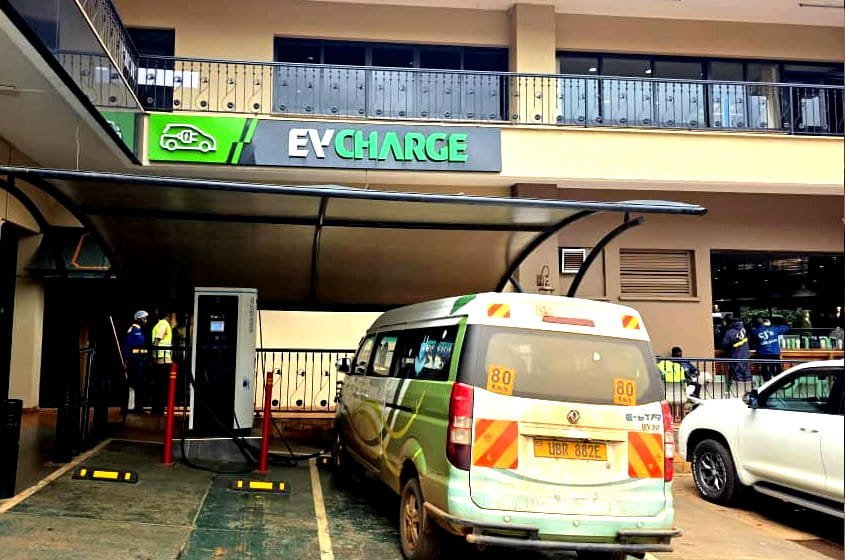
The EPRC study finds that the country’s EV adoption readiness has a moderate score of 0.67, which is above the African average (0.58), though still behind regional peers like Kenya and Rwanda. In addition, the E-mobility ecosystem is gradually taking shape, with over 80 active players spanning manufacturing, financing, energy provision, policy, infrastructure and transportation. Charging stations and battery-swapping networks are expanding, with EV numbers growing steadily in recent years.
Public awareness and acceptance are also encouraging. The study shows that over 90 percent of respondents were aware of EVs, with nearly two-thirds holding a positive perception of technology. Nearly three quarters expressed willingness to adopt EVs.
However, significant barriers remain. Affordability is a major challenge, with more than 60 percent of respondents indicating that EVs are still too expensive at initial purchase. Most potential users prefer leasing or other financing arrangements rather than outright purchases, highlighting the need for innovative financing models. Infrastructure gaps are equally critical. Inadequate charging/swapping stations (existing ones mainly located within urban areas), limited repair and maintenance services outside urban areas, and electricity reliability, continue to hinder EV adoption.
To unlock the full potential of E-mobility, Uganda should accelerate investment in charging and battery-swapping infrastructure, expand access to affordable financing, and strengthen technical capacity for EV maintenance and repair. In addition, consistent and supportive policy measures, including tax incentives and clear regulatory frameworks and standards, will also be essential in lowering entry barriers and encouraging private sector participation.
The writer is a research analyst at Economic Policy Research Centre
This article was originally published in the Daily Monitor on June 22, 2026