Uganda’s heavy reliance on charcoal is increasingly emerging as a major stumbling block to the country’s ambitious energy transition and environmental targets, according to experts at a high-level policy dialogue convened by the Economic Policy Research Centre (EPRC).
Held at the Sheraton Kampala Hotel recently, the dialogue brought together policymakers, researchers and energy-sector players to ponder on whether Uganda can realistically meet its national and global energy commitments, as millions of households remain dependent on charcoal.
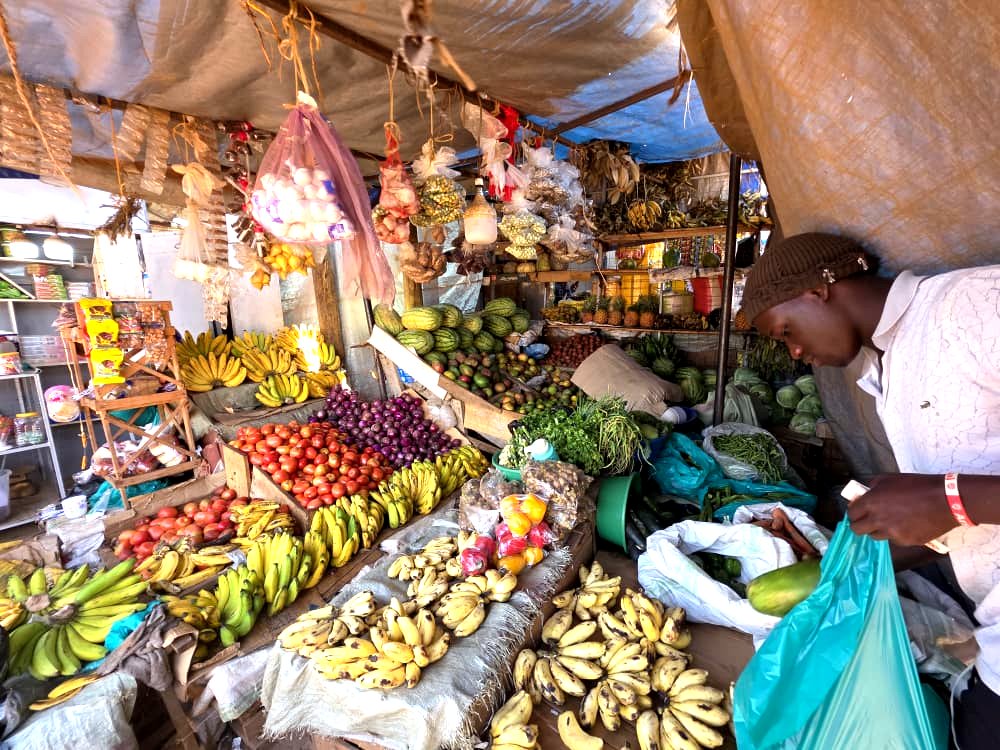
At the heart of the discussions was a stark contradiction: Even as Uganda pushes for the adoption of cleaner energy and forest restoration, charcoal remains the primary cooking fuel — especially in urban areas. Findings presented at the dialogue show that charcoal is still deeply entrenched in Uganda’s energy mix.
Nearly half — 48.6% — of urban households rely on charcoal as their main cooking fuel, with dependence in Kampala standing at an even higher 70.6%. This persistent reliance comes despite sustained efforts by the Government and development partners to promote alternatives, such as liquefied petroleum gas (LPG), electricity and improved cookstoves.
Uganda’s Fourth National Development Plan (NDPIV) sets ambitious targets, including reducing reliance on traditional biomass from 75% to 50% and increasing clean cooking energy use to 50% by 2030. However, experts warn that current consumption patterns suggest the country is unlikely to meet these targets without a major shift in strategy.
“Low uptake of alternatives persists despite promotional efforts,” the report notes, pointing to affordability constraints and behavioural preferences as key barriers to transition.
A Multi-Trillion Shilling Industry
Charcoal is not merely an energy source — it is a major economic sector. The annual value of traded charcoal in Uganda is estimated at $580m (over sh2 trillion), supporting approximately 200,000 livelihoods across production, transportation and trade. Production is largely concentrated in poorer rural regions, where communities depend on charcoal as a primary source of income. This creates a difficult policy dilemma: Any attempt to curb production risks undermining the livelihoods of already vulnerable populations.
Experts cautioned that “alternative livelihood options should be considered before curbing charcoal production,” underscoring the need for a just transition that balances environmental sustainability with economic realities. Compounding the challenge is rapid urbanisation, which continues to drive demand. Data shows charcoal production rising steadily alongside urban population growth — an indication that the issue is structural, not temporary.
Co-Ordinated Action Needed
Speaking at the dialogue, Dr Sarah Ssewanyana, the EPRC executive director, emphasised the need for a co-ordinated and realistic approach to managing Uganda’s energy transition.
“We are here discussing the dilemmas around charcoal production and utilisation because it is one of the energy sources most Ugandans rely on,” she said. “As much as it is affordable, it has serious environmental implications, particularly on forest cover and related ecosystems.”
Ssewanyana stressed that charcoal should not be viewed in isolation, noting that deforestation is driven by multiple factors.
“Charcoal is not the only factor affecting our forests. We also have other drivers like agriculture, urbanisation and the growing population of Ugandans,” she said.
Ssewanyana linked the discussion to Uganda’s broader development frameworks, including NDPIV and the Government’s Tenfold Growth Strategy, both of which prioritise greener energy.
“When you look at these frameworks, there is a strong emphasis on the use of greener energy. But the reality is that the country still requires a lot of energy, and we must rethink our approach if we are to transition households away from charcoal,” she said.
Ssewanyana argued that achieving energy transition goals is possible, but only with stronger collaboration. “What we need is better coordination — how do we work together towards a common goal?” One of the most striking insights from the dialogue is that charcoal use is not confined to low-income households. Even relatively well-off households continue to rely on it, pointing to deeper behavioural and structural issues.
Ssewanyana highlighted the role of cultural preferences in sustaining charcoal use.
“People can tell the difference between food prepared using charcoal — the taste and aroma are different,” she said. “We must address these perceptions to see a shift.”
Ssewanyana also pointed to the high cost and unreliability of electricity as barriers to the adoption of cleaner alternatives.
“Even households that are better off are still using charcoal,” she said. Clean energy uptake lags Linda Nakato, an EPRC research fellow, challenged the assumption that rising incomes automatically lead to cleaner energy adoption.
“When you look at the data side-by-side, households are moving from wood to charcoal as incomes increase, rather than transitioning to cleaner energy alternatives,” she said. “This raises serious questions about the effectiveness of our current interventions.” Nakato argued that policymakers may have underestimated the importance of behavioural change.
“We often assume that when incomes rise, households will adopt LPG or electricity. But if that is not happening, then we must rethink our approach,” she said. “Behaviour change is critical.” The researcher pointed to strong cultural attachments to charcoal, particularly its perceived impact on taste and cooking quality.
“That cultural preference is real, and it must be addressed,” Nakato said.

Some participants at the recent EPRC dialogue on the dilemma of attaining sustainable charcoal production and utilisation in Uganda
Unsustainable subsidies?
Nakato also questioned the sustainability of subsidy-driven interventions aimed at promoting cleaner cooking. “Yes, LPG and appliances may be subsidised today. But what happens when households must pay the full price for refills?” she asked. “There is a real risk that people revert to charcoal.”
Nakato highlighted affordability concerns even among wealthier households, suggesting that cleaner alternatives may still be out of reach for many.
At the same time, poorer households bear a heavier burden, spending over 16% of their income on charcoal.
“The poorest households pay more because they buy in small quantities. Over time, it becomes more expensive than bulk purchases by wealthier households,” she said. Nakato called for targeted interventions, including subsidies and eco-friendly cooking technologies directed specifically at low-income households.
Complex, fragmented chain
The dialogue also shed light on the complexity of Uganda’s charcoal value chain, which spans production, transportation, distribution and consumption.
The sector is highly gender skewed: Production is largely male dominated, while women play a significant role in retail trade and household use.
“This is a complex ecosystem in a harmonised way.” She also pointed to contradictions between national policies focused on sustainability and local government incentives geared toward revenue generation. “We have policies pushing sustainability at the national level, but at the local level, the focus is often on revenue. These contradictions undermine implementation,” Nakato said.
Key questions remain:
How can Uganda reduce charcoal dependence without destroying livelihoods? How can cleaner alternatives be made affordable and attractive? And how can fragmented institutions be aligned to deliver coordinated action? EPRC boss Ssewanyana emphasised that success will require a shift from isolated interventions to a more integrated approach.
“The standard way of working will not get Uganda where it needs to go. We must co-ordinate and align our efforts,” she said. Nakato echoed the call for a holistic strategy that considers both environmental and socioeconomic realities.
“If we are to transition, we must understand who gains and who loses,” she said. “Only then can we design solutions that are sustainable and inclusive.” With multiple actors whose livelihoods depend on it,” Nakato said. “Any transition must take these dynamics into account.”
However, governance challenges remain a major bottleneck. The sector is regulated by multiple institutions, including the Ministry of Water and Environment, the National Forestry Authority, local governments and the Ministry of Energy and Mineral Development.
“What we are seeing is fragmented authority and unclear co-ordination,” Nakato said. “Different institutions are working, but not necessarily.
This article was first published in the New Vision on March 24, 2026
Read the PDF here;