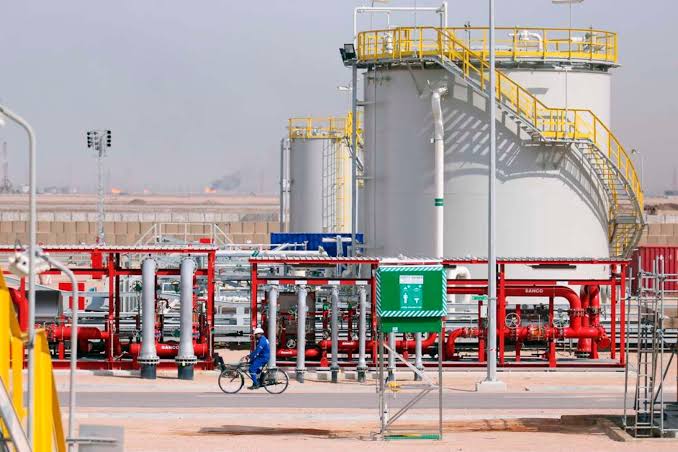
For decades, Uganda and other East African countries have relied heavily on imported refined petroleum products. Regional demand is estimated at approximately 20-30 million metric tonnes annually, leaving these economies exposed to volatile international prices, foreign-exchange pressures and disruptions in global supply chains. This dependence partly explains the growing regional emphasis on domestic production, productivity and value addition in the oil and gas sector.
In Uganda, petrochemicals have been identified as one of the anchor areas for achieving the country’s ten-fold economic growth ambition. The planned $4bn oil refinery at Kabaale village in Hoima and the East African Crude Oil Pipeline (EACOP) are therefore central to the country’s strategy aimed at reducing the importation of petroleum products and facilitating crude-oil exports respectively.
These investments are particularly important at a time when geopolitical risks have made fuel importation uncertain. According to the Ministry of Finance, Planning and Economic Development’s Performance of the Economy report for August 2026, formal private sector oil imports reached USD 200.7 million in July 2026, 88 percent higher than the USD 107.0 million recorded in July 2025.
However, the recent launch of the construction of the $16 billion Dangote refinery in Lamu, Kenya, on 30 September 2026 introduces a critical new dynamic into the region’s oil and gas sector. For Uganda, the project presents both an opportunity and a wake-up call to ensure that its petroleum investments remain economically viable within a rapidly changing regional energy landscape.
First, while the project promises a larger regional market for Uganda’s crude oil and potentially more reliable fuel supplies, it may compete directly with the country’s long-delayed refinery in Hoima. The Dangote refinery’s processing capacity of 700,000 barrels per day (more than eleven times that of Uganda’s proposed 60,000 barrels per day plant) would require supplies from several countries, creating a potential market for crude oil from Uganda and other East African countries.
However, its large scale could generate substantial economies of scale, allowing it to produce and supply refined petroleum products at more competitive prices. Relatedly, Uganda would need an economically viable system for transporting crude to Lamu as the export pipeline (EACOP) runs towards Tanga. Supplying the Kenyan refinery may therefore require a new pipeline, or more expensive road and rail transportation, making the investment less profitable.
Secondly, the Lamu project could deepen East African integration through cross-border crude-oil trade, shared infrastructure and regional investment. Dangote has reportedly offered Kenya, Ethiopia and Rwanda a combined 30 percent stake in the refinery, with Kenya considering a 10 percent share. Uganda’s Capital Markets Authority (CMA) has also approved the Initial Public Offering of Dangote’s refinery, potentially widening investment opportunities for Ugandan investors.
However, deeper integration does not necessarily mean shared economic gains as each country may aim at protecting its own priorities. For instance, Kenya could prioritise Lamu to protect domestic jobs, revenues and energy interests, while Uganda seeks markets for its own refinery output. This calls for regional coordination because competing national interests could undermine the very integration these investments promise.
Third, delays in Uganda’s oil infrastructure could put the planned Hoima refinery at a competitive disadvantage. Construction of the refinery and its supporting infrastructure have lagged, while petroleum storage capacity remains limited, as indicated in the Fourth National Development Plan (NDP IV). If the Lamu refinery becomes operational by 2030 as planned, it could secure regional markets before Hoima begins production. Uganda’s skills gap poses an additional challenge.
NDP IV estimates that the country will need about 960 petroleum engineers by 2030, compared with the 417 currently available. Shortages of geophysicists, pipeline engineers, environmental scientists and refinery technicians could further delay infrastructure development and constrain the refinery’s operations.
Nonetheless, Dangote’s entry does not make the Hoima refinery irrelevant. Unlike Lamu, which has yet to secure its crude supply, the Hoima refinery would be located near the oilfields that will feed it and could enhance domestic energy security, reduce the cost of importing products from the coast, and support industries producing LPG, plastics, fertilisers, bitumen and other petrochemicals. It would also retain more value, employment and technical capacity within Uganda.
With the increasing global oil prices largely driven by global supply management measures, and the persistent geopolitical tensions in the Middle East, a local refinery provides an opportunity for Uganda to accelerate its oil production and subsequently achieve some of its development ambitions.
Therefore, the commercial case for the Hoima refinery should be reassessed. The country should update its demand forecasts, construction costs, financing structure and expected refining margins to reflect the arrival of a very large regional competitor.
The refinery should proceed on the strength of a credible business case rather than national pride alone. Additionally, the East African Community should develop a regional petroleum infrastructure plan which identifies how the Lamu refinery, Uganda’s refinery, EACOP, ports, pipelines, storage terminals and national fuel-security policies will complement one another.