Uganda could be losing a substantial $1.2 billion market opportunity within the ready-to-eat (RTE) staples sector, with products such as processed snacks and fruit juices, by continuing its high reliance on the export of unprocessed agricultural commodities.
Dr. Isaac Shinyekwa, Head of the Trade and Regional Integration Department at Economic Policy Research Centre (EPRC), said that Uganda currently exports approximately 80% of its farm output unprocessed. This practice significantly limits the captured value, resulting in the country realising only about 30% of the final retail price. This assertion was made during the 16th annual competitive forum focused on regional opportunities for food processing and animal feeds in Uganda, organised by the Ministry of Finance, Planning, and Economic Development (MoFPED) in Kampala.
The issue is compounded by significant post-harvest losses, as Uganda harvests approximately 1.4 million tons of key fruits, including mangoes, pineapples, and bananas, annually, much of which is lost before reaching the market.
The regional demand for RTE staples, specifically juices and snacks, is exhibiting a robust annual growth rate of 9%. Dr. Shinyekwa pointed out that value-added products are meeting this rising demand across regional markets, including Kenya, Uganda, the Democratic Republic of Congo (DRC), and Rwanda.
He said: “This is a big loss—the message here is that we must go into agro-processing.”
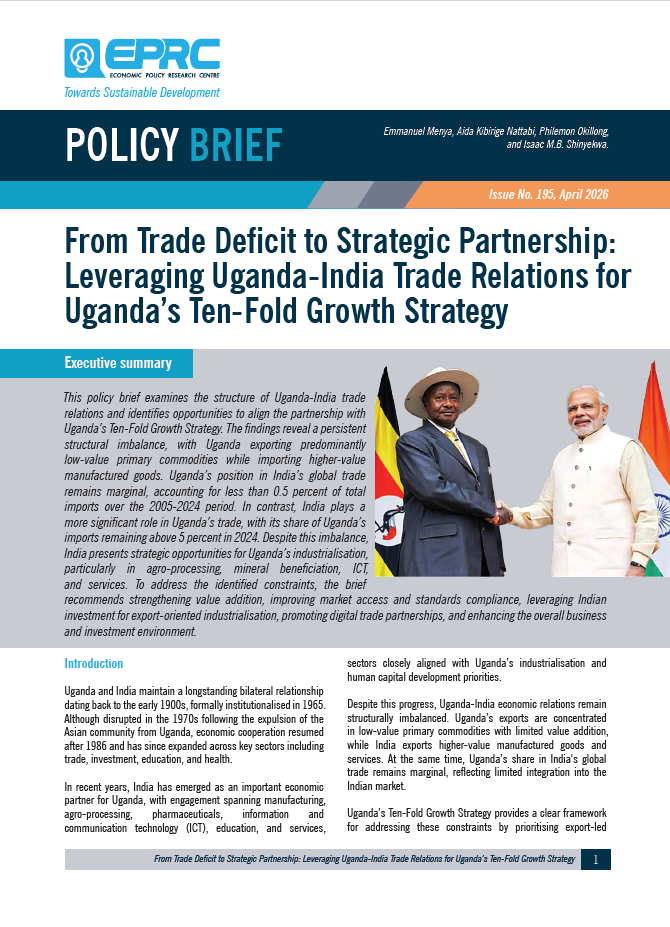
Despite the acknowledged challenges, such as non-tariff barriers (NTBs), significant opportunities exist for the export of processed foods within regional economic blocs. The East African Community (EAC) Common Market offers Ugandan processed foods instant duty-free, quota-free access to regional markets.
The Common Market for Eastern and Southern Africa (COMESA) currently grant an 87% tariff preference, scheduled to rise to 100% by 2028. Furthermore, the African Continental Free Trade Area (AfCFTA) will lead to the liberalization of 90% of tariff lines within five years. Dr. Shinyekwa further noted that these frameworks enable Uganda to ship fruit purees, maize meal, and dairy products to a consumer base of 1.7 billion people, benefiting from simplified rules of origin based on the use of local raw materials.
The Government of Uganda has initiated efforts to stimulate agro-processing through the development of agro-industrial parks in locations such as Kapeeka, Soroti, and Nwoya.
According to Dr. Shinyekwa, these parks are designed to provide essential infrastructure, including “plug-and-play factories,” reliable power supply, and on-site cold storage facilities situated within 200 kilometres of major farming areas.

A screengrab of Dr Isaac Shinyekwa speaking at 16th annual competitive forum organised by Ministry of Finance