The survival rate of Ugandan family businesses is bleak: less than 10% continue past the founding generation. To overcome this, founders have been urged to hire professionals and integrate interested family members into the day-to-day running of enterprises from their formative stages.
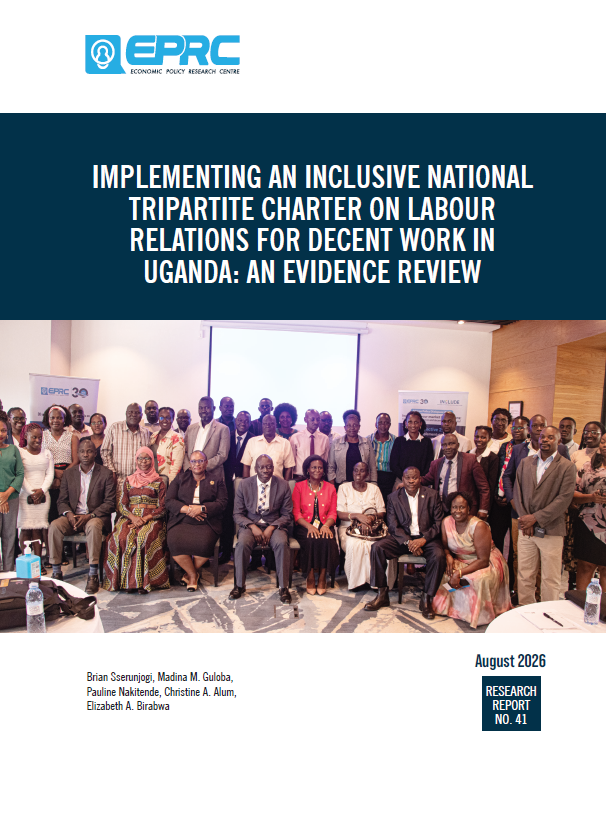
The appeal was made during a high-level stakeholders’ meeting organised by the Economic Policy Research Centre (EPRC) at the Serena Hotel on December 9, 2025. The gathering focused on disseminating a new study and discussing the critical challenges that hinder the transition of these businesses.
Dr. Sarah Ssewanyana, the EPRC Executive Director, emphasised the severity of the issue.
“Despite their significance, many of the family businesses fail to transition beyond the founder generation,” she said in a statement read by EPRC Director of Research, Dr. Ibrahim Kasirye. “In the absence of proper succession plans, sound governance systems, and financial procedures, most family-owned businesses collapse at the first kind of crisis—whether it is due to market sources or the sudden loss of a founder. This fragility is not just a business problem. It is a development concern.”
EPRC Research Fellow Dr. Linda Nakato presented the study findings, revealing a high ratio of first-generation to multi-generational family businesses in Uganda, standing at 4:1. This implies that the majority are young enterprises, with only a paltry 10% surviving to see the next generation take the reins.
Read Factsheet: From Generation to Generation: Key Facts on Family Business Survival in Uganda
Leaders Speak

Participants at the stakeholders’ workshop discussing the critical challenges that hinder the transition of these businesses. Photo/EPRC
The meeting drew a critical mass of stakeholders, including founders, owners, and academics, with prominent figures such as Aga Ssekalala Jr (UgaChick), Dr. Patrick Bitature (Simba Group), Dr. Barbara Ofwono Buyondo (Victorious Education Services), and Mrs. Jennipher Kasisiri (Kampala Quality Schools) in attendance.
Ms. Jennipher Kasisiri, the founder of Kampala Quality Schools, shared her experience of involving her children. She stressed that integration was not an overnight event but a gradual process that began when the children were young, culminating in them joining the day-to-day operations after completing their education.
Mr. Robert Kabushenga, the proprietor of Rugyeyo Coffee Farm, underscored the importance of separating family and business relationships. He advised: “The key fundamental question of governance is not at the board of the business. It is at the family level.” He suggested setting up a “family office” structure to ensure that family disputes do not spill over into the business. He also advocated for children to have the freedom to choose whether to join the enterprise or not, noting that a spouse is not necessarily a business partner.
Mr. Rajesh Kumar, the Chairman of the Indian Business Association, pointed to the Indian business culture of frugality as a crucial factor for continuity. He warned that an extravagant lifestyle is one of the “killers of businesses,” giving the example of Kingfisher India. “Instead of spending on luxury life… if you can put that money back into the business, you will earn much more,” he advised.
Mr. Asiimwe Isaac, the Sales and Marketing Lead at Numa Foods, highlighted the critical role of spousal understanding. He recounted a devastating incident where the factory burnt down; the company was only able to rebuild using savings from his mother’s separate secretarial bureau. “Had it not been spousal understanding, it would have been difficult to re-instate the factory,” he stated.
Ms. Irene Birungi Mugisha, Chairperson of the Presidential CEO Forum, applauded EPRC for initiating what she called an “important conversation” crucial for securing the future of family-owned enterprises in Uganda

Dr Patrick Bitature at the meeting.