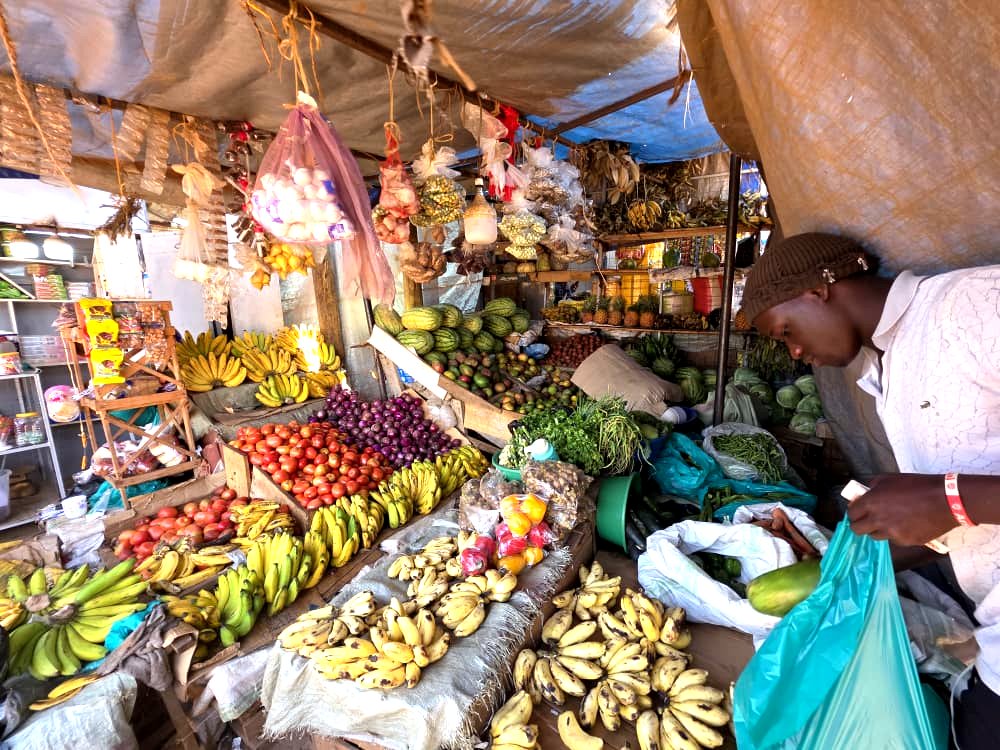
On this Labour Day, look beyond the suits and podiums. Spare a thought for the woman selling tomatoes at the trading centre, the one bent over a hoe in Kapchorwa, the tailor in Kikuubo, and the cleaner who arrived at the office before you.
They are the backbone of Uganda’s economy, yet recent figures suggest the country still treats their work as an afterthought. Two recent reports, the Uganda Bureau of Statistics 2025 Labour Market Survey (LMS) and the Economic Policy Research Centre study on women in Uganda’s labour force, reveal an uncomfortable reality: the Ugandan economy depends on women’s labour while systematically underpaying it.
More women, less work
Despite making up 59.8 percent of the working-age population, women are being left behind. Only 37.4 percent of women are employed, compared with 53.1 percent of men. That’s a 15-point gap that has remained stagnant since 2021. For young women (15-24), the situation is even grimmer, with unemployment at 21 percent compared to 15.2 percent for young men.
Behind these statistics are countless real young women who studied, hoped, applied, and received nothing in return. The unemployment rate tells the same story from another angle. Women are at 13.9 percent, while men are at 10.8 percent for persons aged 15 years and older. In urban areas, the gap is even wider, with women at 14.9 percent and men at 11.1 percent. As such, nearly one in seven urban women seeking work can’t find any.
The Informality trap
Where do women find work? Mostly in the survivalist “hustle.” While half of all employed Ugandans work in services, for women, that figure jumps to 56.4 percent. They dominate independent workers category. They sell products, cook, clean, braid hair, and run roadside shops next to boda boda stages, providing trade and services with no staff, no contracts, and no pay slips. By contrast, industry — the sector that builds wealth and is expected to pay better — employs just 6.9 percent of working women. For men, it’s more than double that figure, at 16.3 percent.
In fact, 95.1 percent of young women aged 15 to 24 entering Uganda’s labour market today are in informal employment. While a Kikuubo trader can out-earn a university professor, informality offers no safety net. When a woman falls sick or become pregnant, she bears the loss alone.
The pay gap is real
Even when women do break into paid employment, they take home less. The EPRC found that women with degrees earn a median of UGX 800,000 per month, while their male counterparts earn UGX 900,000 per month. In private sector jobs, the median monthly wage for women is a mere UGX 150,000, compared with UGX 240,000 for men.
The work nobody pays for
Then there’s the work that doesn’t appear in any survey as employment at all. The EPRC study estimates that Ugandan women spend 29.7 hours a week on unpaid care work, including cooking, fetching water, caring for children and the elderly, and washing clothes, more than double the 13 hours men spend. This “invisible tax” prevents women from taking factory shifts or opening shops early.
What would help
To get women into better paid work, we must provide: affordable childcare and enforcement of maternity protections, which are essential for working mothers in the private sector; education, because keeping girls in school remains the most effective lever for increasing earnings; and a deliberate push to move women from subsistence agriculture into higher-paying industry jobs.