After a year of unflattering media, and the eventual dismissal of its chief executive officer, Uganda’s flag carrier’s reputation was left bruised. Flight delays, inadequate communication and social‑media backlash left travellers wary and exporters nervous about the reliability of cargo services.
The appointment of veteran aviation expert Mr. Girma Wake as the new consultant and acting CEO of Uganda Airlines offered a promising path to a better future.
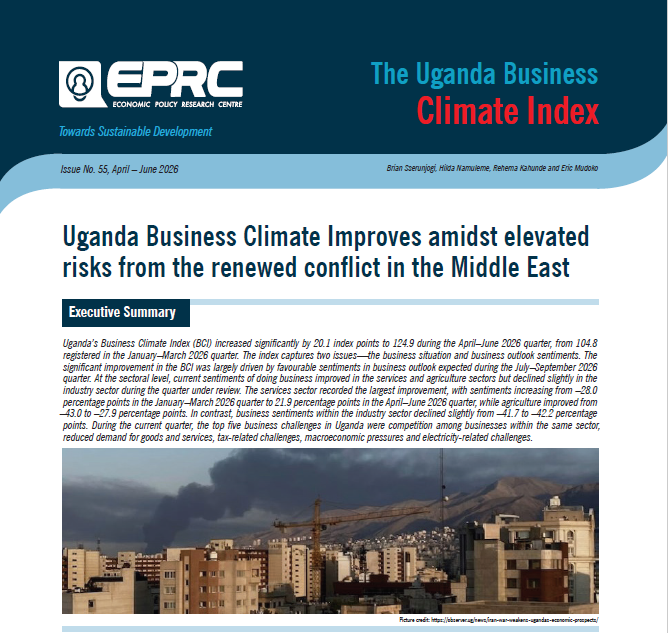
However, the US-Israel war with Iran seems to complicate things further. First, by disrupting air travel to lucrative Middle East destinations, and two, by rising fuel costs. This means newer carriers could suffer serious dents in revenue projections.
For Uganda Airlines, this puts extra baggage in its quest to turn things around. The latest audit of the firm revealed that revenues surged by more than 50 % to UGX 349.6 billion in FY 2023/24, narrowing the overall deficit by 26.5 %. The challenge now is to convert this momentum into a resilient, financially sound national airline that can withstand unforeseen shocks such as Israel-Iran war.
African countries that have managed to develop a sustainable model of national carriers, like Ethiopian Airlines, offer some lessons in this regard
Uganda’s NDP IV earmarks nearly UGX 5 trillion of taxpayer money for the carrier. While short-term funding can keep the jet engine running, long‑term sustainability demands a shift away from perpetual budget support. Established Airlines have demonstrated that a state‑owned carrier can thrive when it “operates at arm’s length from political interference and does not rely on recurrent budget support”. Uganda should emulate this model by seeking commercial financing, development loans and revenue-based growth rather than continual public bailouts.
Rapid expansion into long-haul routes such as the planned service to Mumbai has stretched a modest fleet thin. Uganda should bite what it can chew: focus on high‑yield routes, tighten schedules, and avoid over-promising destinations that cannot be consistently served. A leaner network will improve load factors, restore passenger confidence, and generate the cash flow needed for future growth.
The Parliament of Uganda’s recent allocation of budgets for aircraft has also raised concerns about whether the allocation was a long-term planned investment rather than an emergency. While a one‑year wet‑lease of an Airbus A320 from DAT Lithuania provides needed capacity, leasing should be used selectively and negotiated with clear maintenance and crew cost provisions.
Ethiopian Airline’s early reliance on operating leases allowed swift capacity gains, but it later moved to a balanced mix of leases and outright purchases as revenues grew. Uganda should adopt a similar phased approach, using leases to bridge demand gaps while planning for eventual ownership of efficient aircraft.
Dependence on expatriate crews and foreign maintenance inflates operating costs. Ethiopian Airline’s establishment of aviation academies, pilot schools and in‑house maintenance facilities reduced that reliance and cut long‑term expenses. Uganda should prioritise capacity‑building initiatives, training pilots, engineers and managers domestically to create a self‑sufficient talent pipeline and lower its cost base.
Uganda Airline’s image will not rebound on numbers alone. Clear, proactive communication about flight schedules, delays and remedial actions is essential to regain the confidence of both leisure travellers and the business community that relies on timely cargo shipments. A transparent governance framework, insulated from political meddling, will further reassure stakeholders that decisions are driven by commercial logic, not short‑term political expediency.
Aircraft purchases should fit a coherent, data‑driven plan that balances capacity, fuel efficiency and route demand. Blindly allocating funds for new planes without a solid business case risks repeating past mistakes and deepening the fiscal burden. A phased acquisition program will allow the airline to scale sustainably.
Overall, Uganda Airlines path forward lies in disciplined governance, certainty in financing, building indigenous expertise, and how it responds to global shocks.
The writer is a research analyst at Economic Policy Research Centre
This article was first published in the Daily Monitor on April 2, 2026
Featured photo credit: Uganda Airlines