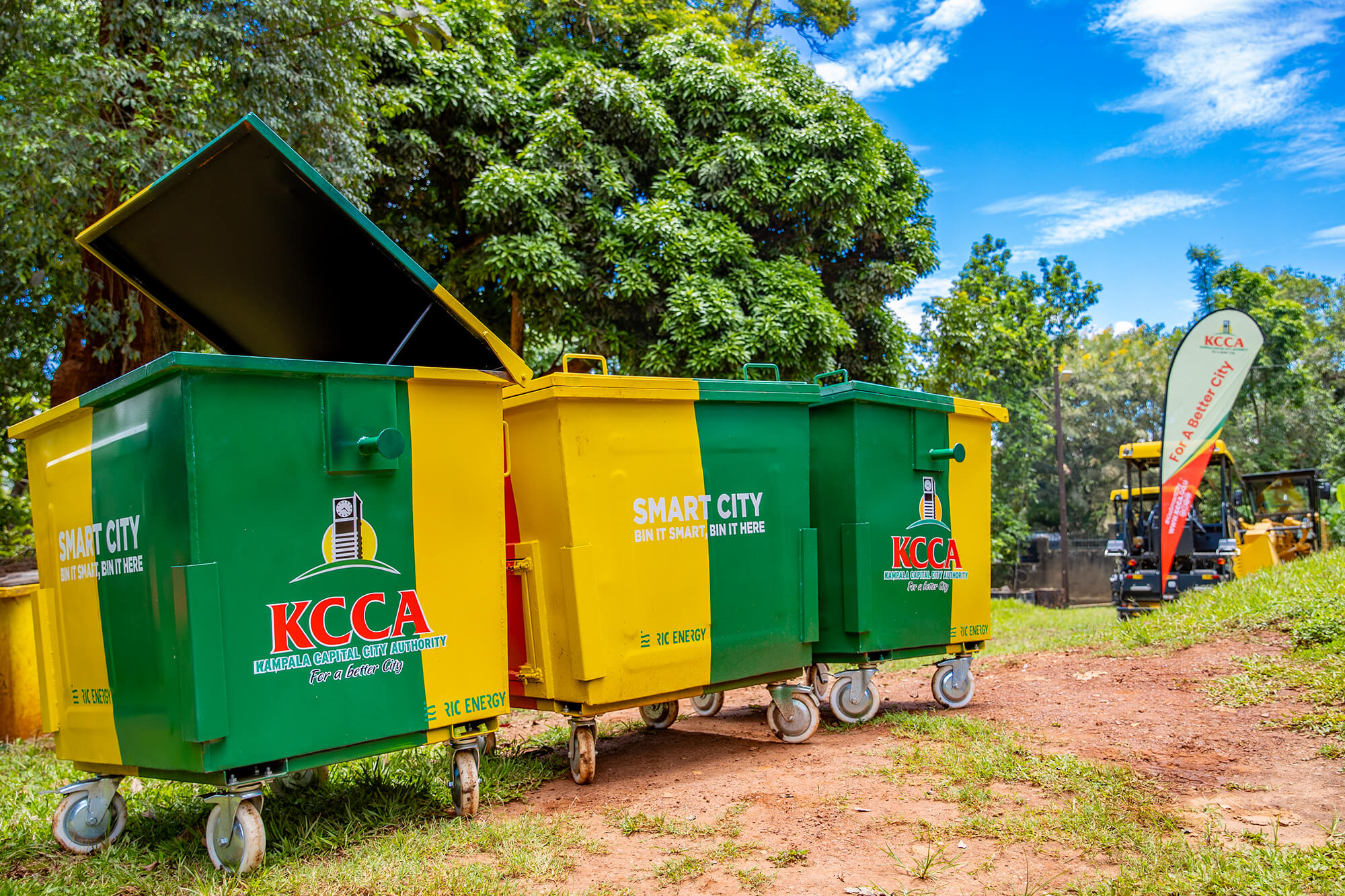
Kampala produces mountains of rubbish from homes, markets, restaurants, offices and industries. This waste has become a public-health burden. It blocks drainage channels, pollutes water sources, produces unpleasant smells. Yet beneath the rotting food, market remains and other organic materials lies a potentially valuable energy resource.
KCCA estimates that the city generates approximately 2,500 tons of solid waste daily. About 80% of it is organic material, while plastics constitute around 6% and 14% other types of waste such as glass, paper and textiles and glass, paper, textiles.
Can Kampala’s dumping sites be transformed into facilities that produce and store energy? The answer is yes, but with an important qualification. A dumping site cannot store electricity directly in the same way that a battery does. However, properly managed waste facilities can convert organic waste into methane-rich biogas, which can be stored and later used to generate electricity when demand is high. Waste-to-energy plants can also be connected to battery systems that store some of the electricity produced.
For years, much of Kampala’s collected waste was transported to Kiteezi landfill. The site eventually exceeded its intended capacity, creating serious environmental and safety risks. The fatal collapse at Kiteezi in August 2024, killing 34 people and displacing hundreds of residents, demonstrated that uncontrolled dumping is not simply an issue of bad smell or visual pollution. It can destroy homes, contaminate communities and cost lives.
From a Garbage Dump to an Energy Facility
When food, vegetation and other organic materials decompose without oxygen, they release landfill gas containing methane. Instead of allowing this gas to escape into the atmosphere, engineered wells and pipes can capture it. The gas can then be cleaned and burned in engines or turbines to produce electricity.
According to the International Energy Agency, biogas commonly contains between 45% and 75% methane and can be used directly to generate electricity and heat. The gas can also be stored temporarily in pressurized tanks or gas holders. In this sense, Kampala’s organic waste could function as a form of stored chemical energy that is converted into electricity when required.
This matters because methane escaping from poorly managed dumping sites is both dangerous and environmentally harmful. The United States Environmental Protection Agency estimates that well-designed landfill-gas projects can capture approximately 60% to 90% of the methane generated at a landfill. Capturing and using the gas would therefore provide electricity while reducing fires, odours and greenhouse-gas emissions.
How Much Electricity Could Kampala’s Waste Produce?
According to Amulen et al. (2022), Kampala’s municipal solid waste management system estimated that a modern incineration facility could produce approximately 774 kilowatt-hours of electricity from each tonne of waste which could provide electricity of 44 kilowatt-hours per month to an average low-consumption household for about five months. The study also found that such a project could be financially viable, with an estimated internal rate of return of 12.9% under its assumptions.
Kampala’s waste contains considerable moisture, which can reduce the efficiency of direct incineration. Therefore, the city should not simply burn mixed rubbish. Organic waste should be separated for anaerobic digestion, while plastics, metals, paper and glass should be recovered for recycling. Only non-recyclable combustible materials should be considered for controlled thermal treatment.
Several countries demonstrate that waste can contribute meaningfully to energy security.
Singapore operates highly controlled waste-to-energy plants because it has limited land for dumping. Incineration reduces the volume of waste by approximately 90% while recovering energy to generate electricity. Its Tuas South plant can process 3,000 tonnes of waste per day. About 30% of the electricity produced operates the facility, while the remaining 70% is exported to the national grid. Another facility, TuasOne, can process 3,600 tonnes daily and generate up to 120 megawatts of electricity.
Cape Town provides strong evidence that landfill waste can be transformed from an environmental burden into a valuable energy resource. In March 2026, the city reported investing R93 million in the Coastal Park Landfill gas-to-power plant, which captures methane from decomposing waste and converts it into electricity. The facility generates about 1.3 million kWh per month, enough to supply electricity to more than 4,300 households, while also powering some landfill operations.
Kenya’s most significant initiative is the planned 45 MW Dandora Waste-to-Energy Plant in Nairobi. The project is being implemented through a Public-Private Partnership (PPP) between Nairobi City County and the China National Electric Engineering Company (CNEEC). Once completed, it will convert municipal solid waste into electricity while significantly reducing the amount of waste sent to the Dandora dumpsite. The project has progressed to the negotiation stage, with the Power Purchase Agreement (PPA) being finalized by Kenya’s energy regulator.
What is Holding Uganda Back?
Uganda’s challenge is less about the availability of waste and more about collection, infrastructure, financing and implementation. Kampala generates about 2,000–2,500 tons of waste per day, but only 1,300–1,500 tons are collected and safely disposed of, leaving a substantial share outside the formal waste-management system.
Although about 80% of Kampala’s waste is organic, making it potentially suitable for composting and biogas production, inadequate source separation limits efficient recovery. Progress has also been slow: KCCA began structuring its waste-management PPP in 2012, while the treatment component was delayed because of difficulties securing land; 135 acres at Ddundu were later acquired for the proposed facility. KCCA’s 2025/26–2029/30 Strategic Plan now specifically provides for waste segregation, recycling, composting and investment in waste-to-energy, suggesting that the major challenge is turning these plans into adequately financed and operational projects.
Way Forward
Kampala should adopt an integrated waste-management system that begins with mandatory separation of waste at households, markets, hotels and institutions Organic waste, which forms the largest share of the city’s waste, should be directed to anaerobic digesters to produce biogas and electricity, while plastics, metals, paper and glass should be recovered for recycling. KCCA should also develop engineered treatment centres with sorting facilities, lined landfill cells, leachate treatment, methane-capture systems and strict environmental monitoring, rather than relying on open dumping.
This can be implemented through well-structured public–private partnerships that guarantee reliable waste supply, provide gate-fee revenue and secure long-term power-purchase agreements for electricity supplied to the grid. Surplus electricity could be stored in batteries for use during peak demand or outages, while waste pickers should be formally integrated into the recycling system to protect livelihoods and improve working conditions.