Long term collaboration between the UN Women and Economic Policy Research Centre (EPRC) on technical backstopping for generation of gender analysis knowledge products. UN Women, EPRC, and UBOS
Short title: Technical back-stopping for generation of gender analysis knowledge products.
Generation of Gender Analysis Knowledge Products (UN-WOMEN) in collaboration with UN-Women.
This a medium term collaboration project that provides technical back- stopping for generation of gender statistics and policy analysis knowledge products in Uganda. EPRC will work with key gender key stakeholders including: the Ministry of Gender, Labour and Social Development (MGLSD), Uganda Bureau of Statistics (UBOS) and Gender Statistics Advisory Group (GSAG) to develop the required products.
Overview
The Economic Policy Research Centre (EPRC) received funding from UN Women to provide technical support and leadership in evidence-based research and policy analysis through in-depth gender analysis, development of policy and new knowledge products for increased availability and utilisation of gender statistics, data and information to inform policy and decision-making addressed to Gender Equality and Women’s Economic Empowerment.
Purpose and Objectives
To provide technical back-stopping for generation of gender statistics and policy analysis knowledge products
Target audiences:
GOU, JLOS sector, UN agencies, Local Governments, Academic institutions, CSOs
Ministry of Gender, Labour and Social Development
Project approach
Project Activities
i) Preparation and dissemination of policy briefs
ii) Policy dialogues on GBV and access to Justice
iii) Capacity Building for UBOS and JLOS sector
iv) Technical backstopping in terms of peer review
v) Annual Gender statics fora
i) Access to justice for domestic violence cases in Uganda
ii) Delayed access to justice for sexual violence cases in Uganda
iii) Human trafficking in the wake of labour externalization: How responsive is the justice system?
iv) Uganda needs to increase domestic resources to finance gender equality and women’s empowerment interventions.
vi) Uganda’s performance towards tracking budget allocations for gender equality and women’s empowerment.
vii) Adolescent motherhood and maternal deaths in Uganda.
viii) Constraints to girls’ access to secondary education in Uganda.
ix) How can Uganda address gender data gaps in the land sector?
x) The burden of physical gender based violence in Uganda
xi) Will the lack of gender disaggregated statistics affect the attainment of energy SDGs in Uganda?
i) The EPRC project team mentored UBOS Statisticians in policy analysis and policy brief writing:.
ii) EPRC together with UBOS trained senior officers from selected JLOS institutions (Judiciary, ODPP, UPF, UPS, JCU, DGAL & MGLSD) on: data extraction and analysis using MS Excel, data interpretation and reporting, and information dissemination techniques.
3) Held policy engagement and communication events
4) Provided technical backstopping in form of peer reviews
Reviewed five research products in preparation for the third annual gender statistics forum:
The two papers were also presented by EPRC researchers at the AGSF III, which EPRC co-organised with UBOS and UN WOMEN
Here, the EPRC intends to provide technical support and leadership in conducting evidence-based research and policy analysis through in-depth gender analysis, development of policy briefs, and related knowledge products for increased availability and utilization of gender statistics, data, information for policy and decision making addressed to gender equality and women’s empowerment. This is in line with outcome 1.3 quality data is developed to track GEWE process of strategic note (SN 2016-2020).
It is aligned to the UN Women Annual Workplan (AWP 2019) and responds to the following outcomes.



Team Leader
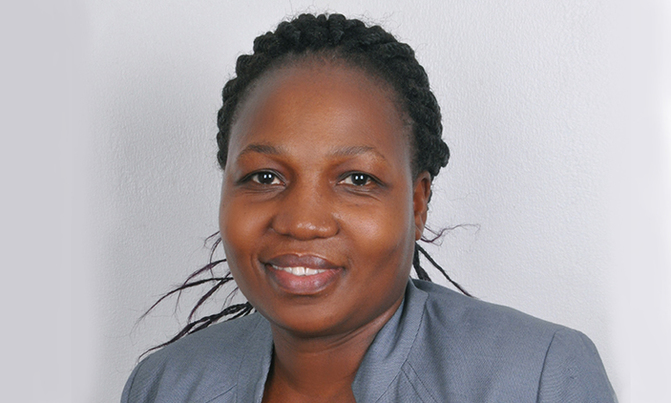
Focal Person

Project Member

Project Communication
No publications

Economic Policy Research Centre
We firmly believe that the internet should be available and accessible to anyone, and are committed to providing a website that is accessible to the widest possible audience, regardless of circumstance and ability.
To fulfill this, we aim to adhere as strictly as possible to the World Wide Web Consortium’s (W3C) Web Content Accessibility Guidelines 2.1 (WCAG 2.1) at the AA level. These guidelines explain how to make web content accessible to people with a wide array of disabilities. Complying with those guidelines helps us ensure that the website is accessible to all people: blind people, people with motor impairments, visual impairment, cognitive disabilities, and more.
This website utilizes various technologies that are meant to make it as accessible as possible at all times. We utilize an accessibility interface that allows persons with specific disabilities to adjust the website’s UI (user interface) and design it to their personal needs.
Additionally, the website utilizes an AI-based application that runs in the background and optimizes its accessibility level constantly. This application remediates the website’s HTML, adapts Its functionality and behavior for screen-readers used by the blind users, and for keyboard functions used by individuals with motor impairments.
If you’ve found a malfunction or have ideas for improvement, we’ll be happy to hear from you. You can reach out to the website’s operators by using the following email
Our website implements the ARIA attributes (Accessible Rich Internet Applications) technique, alongside various different behavioral changes, to ensure blind users visiting with screen-readers are able to read, comprehend, and enjoy the website’s functions. As soon as a user with a screen-reader enters your site, they immediately receive a prompt to enter the Screen-Reader Profile so they can browse and operate your site effectively. Here’s how our website covers some of the most important screen-reader requirements, alongside console screenshots of code examples:
Screen-reader optimization: we run a background process that learns the website’s components from top to bottom, to ensure ongoing compliance even when updating the website. In this process, we provide screen-readers with meaningful data using the ARIA set of attributes. For example, we provide accurate form labels; descriptions for actionable icons (social media icons, search icons, cart icons, etc.); validation guidance for form inputs; element roles such as buttons, menus, modal dialogues (popups), and others. Additionally, the background process scans all the website’s images and provides an accurate and meaningful image-object-recognition-based description as an ALT (alternate text) tag for images that are not described. It will also extract texts that are embedded within the image, using an OCR (optical character recognition) technology. To turn on screen-reader adjustments at any time, users need only to press the Alt+1 keyboard combination. Screen-reader users also get automatic announcements to turn the Screen-reader mode on as soon as they enter the website.
These adjustments are compatible with all popular screen readers, including JAWS and NVDA.
Keyboard navigation optimization: The background process also adjusts the website’s HTML, and adds various behaviors using JavaScript code to make the website operable by the keyboard. This includes the ability to navigate the website using the Tab and Shift+Tab keys, operate dropdowns with the arrow keys, close them with Esc, trigger buttons and links using the Enter key, navigate between radio and checkbox elements using the arrow keys, and fill them in with the Spacebar or Enter key.Additionally, keyboard users will find quick-navigation and content-skip menus, available at any time by clicking Alt+1, or as the first elements of the site while navigating with the keyboard. The background process also handles triggered popups by moving the keyboard focus towards them as soon as they appear, and not allow the focus drift outside it.
Users can also use shortcuts such as “M” (menus), “H” (headings), “F” (forms), “B” (buttons), and “G” (graphics) to jump to specific elements.
We aim to support the widest array of browsers and assistive technologies as possible, so our users can choose the best fitting tools for them, with as few limitations as possible. Therefore, we have worked very hard to be able to support all major systems that comprise over 95% of the user market share including Google Chrome, Mozilla Firefox, Apple Safari, Opera and Microsoft Edge, JAWS and NVDA (screen readers).
Despite our very best efforts to allow anybody to adjust the website to their needs. There may still be pages or sections that are not fully accessible, are in the process of becoming accessible, or are lacking an adequate technological solution to make them accessible. Still, we are continually improving our accessibility, adding, updating and improving its options and features, and developing and adopting new technologies. All this is meant to reach the optimal level of accessibility, following technological advancements. For any assistance, please reach out to
